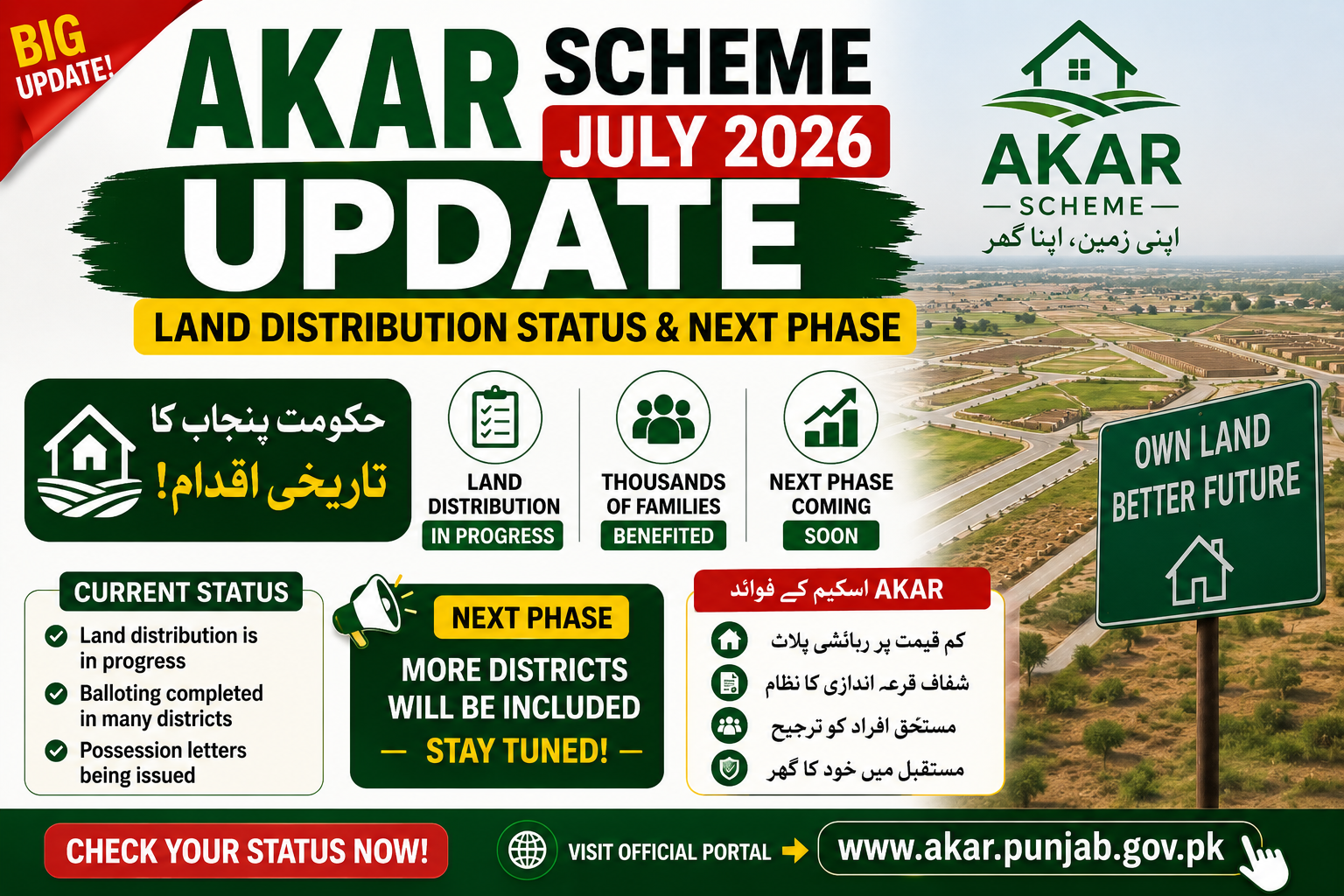
Latest AKAR scheme july 2026 update on land distribution status, appeal results, and what landless farmers should expect next from Apna Khet Apna Rozgar.
The Apna Khet Apna Rozgar scheme has moved from an announcement to an active rollout faster than most Punjab welfare programs of its scale. If you applied earlier this year and are wondering where things stand, or you missed the window and want to know what comes next, this AKAR scheme 2026 update walks through the timeline so far and what landless farmers should expect going forward.
A Quick Recap of the Scheme
Apna Khet Apna Rozgar, commonly shortened to AKAR, is a Punjab government initiative that leases state-owned agricultural land to landless farming families at a nominal rate, generally cited around Rs. 100 per acre per year, on a 10-year conditional arrangement. The program is administered through the Punjab Enterprise Land Record Authority and pairs land allotment with additional support, including access to the Kisan Card, Green Tractor subsidies, and agricultural training through tehsil-level centres.
The scheme is not a one-time land grant. It is structured as long-term leased access that can potentially convert toward more permanent status for families who actively cultivate the land and follow the agricultural guidelines attached to their allotment.
Timeline So Far
Based on the schedule announced by the Punjab government, the rollout followed these key stages:
- Application window: Online registration through the official portal ran for a two-week period earlier in the year.
- Verification stage: Submitted applications went through eligibility screening, including checks on landlessness status, residency within the correct revenue estate, and loan default history.
- Appeals window: Applicants who were not initially selected had a defined period to file an appeal with their district’s Deputy Commissioner if they believed their application was incorrectly assessed.
- Final list issuance: A confirmed list of successful applicants was released following the appeals period.
- Land distribution phase: Physical land handover to successful applicants began shortly after the final list was issued.
If you applied during the original window, your status should now be reflected in the final list rather than the earlier provisional screening stage.
How to Check Your Current Status
- Visit the official AKAR portal and log in using the CNIC and mobile number you registered with originally.
- Check whether your application appears on the final selection list or remains under a different status category.
- If your status shows as rejected or unclear, note the specific reason given, since this determines whether an appeal or a fresh application in a future phase is the appropriate next step.
What If You Missed the Original Window
The application period for this cycle has already closed, but that does not mean the opportunity is gone permanently. Land-based welfare programs of this scale in Punjab have historically been rolled out in phases, expanding coverage as more state land parcels are surveyed, digitized, and made available across additional districts. Given the scheme’s stated ambition to eventually distribute land across all 36 districts, families who missed this cycle have a reasonable basis to expect a future registration window, even though no official date has been confirmed yet.
What Successful Applicants Should Know Now
For families who have been confirmed on the final list and received land, a few practical points matter going forward:
- The lease is conditional on active cultivation. Leaving the land barren or using it for non-agricultural purposes can jeopardize your continued allotment.
- Land under this scheme cannot be sold or transferred, since it remains classified as leased state land rather than a private property grant.
- Access to the linked Green Tractor subsidy and interest-free input loans is generally tied to actively working through the same application file, so it is worth confirming with your local agriculture office how to activate these additional benefits.
What to Watch for Next
Given the scale of this initiative and its direct association with the current Punjab leadership’s rural development agenda, several developments are worth monitoring:
- Announcements regarding additional districts being added beyond the initial rollout areas.
- Any expansion of the total acreage being made available for a potential second phase.
- Updates to the Green Tractor Scheme and Kisan Card components, since these are designed to work in tandem with land allotment rather than as fully separate programs.
Avoiding Scams Tied to This Scheme
As with other high-profile land and cash-linked programs, fraudulent activity has followed closely behind AKAR’s rollout:
- Only use the official government portal addresses associated with the Punjab Enterprise Land Record Authority.
- No legitimate part of the application, verification, or appeal process requires a personal payment to an individual agent.
- Be cautious of anyone offering to guarantee land allocation for a fee, since selection is meant to run through a transparent computerized balloting and verification process.
Why This Scheme Is Being Watched Closely
Land redistribution at this scale has not been attempted in Punjab for decades, which is part of why policy analysts and rural development observers are tracking its rollout so closely. How well the government manages the transition from the current pilot districts to a genuinely province-wide program will likely shape how future welfare initiatives in Punjab are structured, particularly around balancing transparency in balloting with the practical challenge of verifying landlessness claims at scale.
Frequently Asked Questions
Is AKAR registration still open right now? The most recent application window has closed, though a future phase is widely expected given the scheme’s stated ambition to eventually cover all districts of Punjab.
Can I appeal if I believe my application was wrongly rejected? Yes, an appeal process through your district’s Deputy Commissioner was built into this cycle’s timeline, though the specific appeal window for this round has already passed.
Does receiving land under AKAR mean I own it outright? Not immediately. The land is provided on a long-term conditional lease, with potential for more permanent status tied to consistent cultivation and compliance with program guidelines.
Will a new phase have the same eligibility rules? The core eligibility framework, focused on landless status, Punjab residency, and no history of loan default, is likely to remain broadly similar, though specific district quotas may shift for a future phase.
Final Word
The AKAR scheme has moved unusually quickly from announcement to actual land distribution, which is a strong signal the Punjab government intends to expand it further rather than treat this cycle as a one-off pilot. Families who missed this window are better served preparing their documents and monitoring the official portal for the next announcement than assuming the opportunity will not return.