Step by step guide to BISP biometric ATM withdrawal in 2026, covering HBL and Bank Alfalah machines, common errors, and what to do if your card is lost
Collecting your installment used to mean standing in a long line at a designated camp or retail point. Today, BISP biometric ATM withdrawal lets many beneficiaries collect their payment directly from designated bank machines using nothing but a fingerprint and their BISP card. This guide explains exactly how the process works, which banks support it, and what to do when something doesn’t go smoothly.
What Is BISP Biometric ATM Withdrawal
Biometric withdrawal means the ATM confirms your identity using a fingerprint scan rather than relying solely on a PIN code. This is intentional, since it removes the risk of someone else using a lost or stolen BISP card to withdraw funds. Even if your card ends up in the wrong hands, a fingerprint match is still required to release any money.
Which Banks Support BISP Biometric Withdrawal
The two most commonly used networks for BISP disbursement are HBL and Bank Alfalah, through their designated agent points and biometric-enabled ATMs. Availability can vary slightly by district, so it is worth confirming with your local Tehsil office or checking your portal result, which usually lists your nearest assigned collection point.
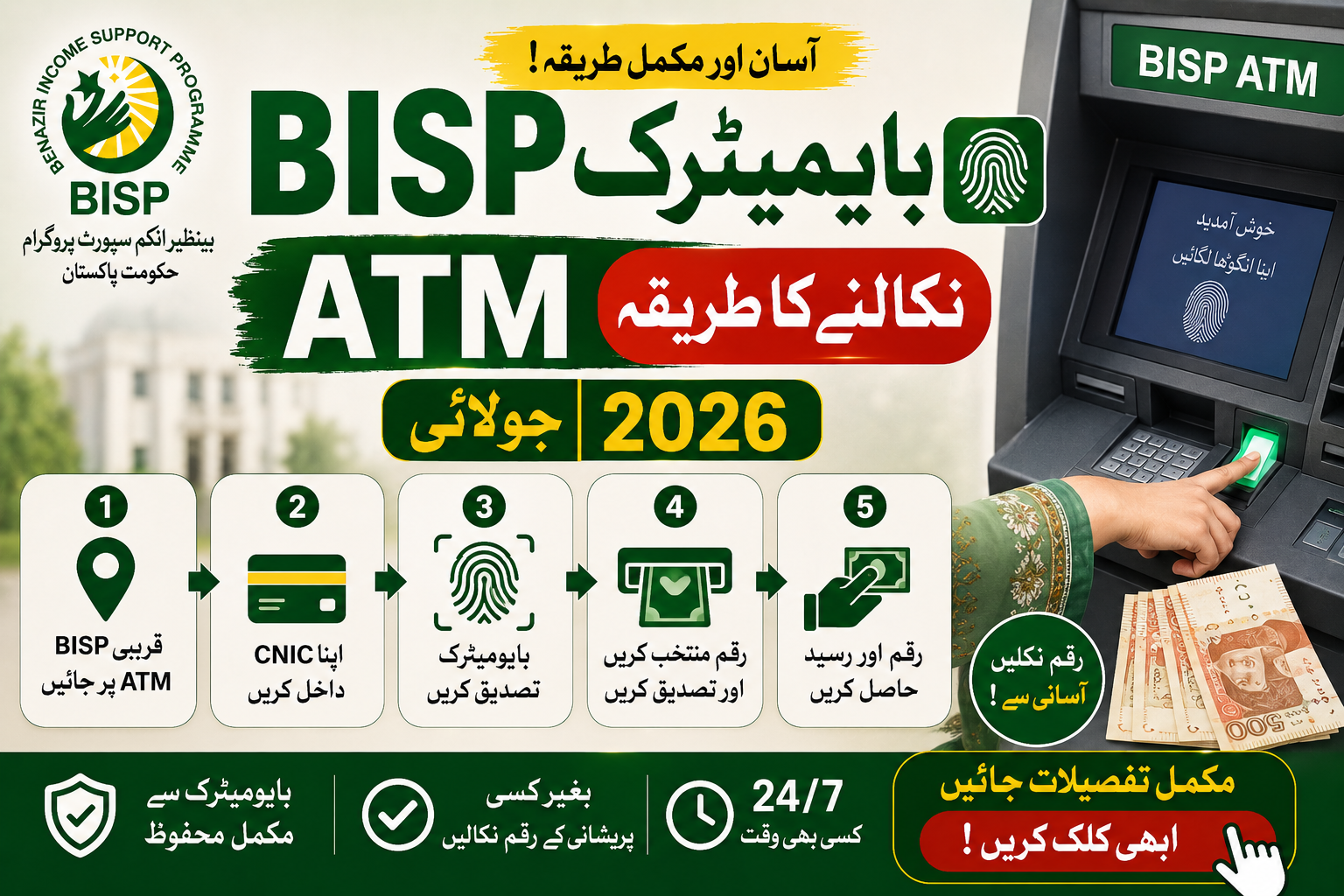
Step-by-Step: Withdrawing at a Biometric ATM
- Bring your original BISP card and your original CNIC. A photocopy is not sufficient for biometric verification purposes.
- Locate a designated biometric-enabled machine or agent point, since not every standard ATM supports this specific verification method.
- Insert your card or follow the agent’s instructions if using an agent-assisted point rather than a self-service machine.
- Place your finger on the scanner exactly as instructed, usually the thumb, and hold steady until the scan completes.
- Enter the withdrawal amount if prompted, or confirm the pre-filled installment amount shown on screen.
- Collect your cash along with a printed receipt, and check the receipt before walking away to confirm the full amount was issued.
What to Do If Your Fingerprint Doesn’t Match
This is one of the most common complaints, and it is usually a simple fix rather than a sign of a deeper problem:
- Dry or rough skin can prevent a clean scan. Lightly moistening your fingertip, for example by breathing on it, often helps.
- Try a different finger if the first attempt fails, since some scanners get a cleaner read from a different digit.
- Clean the scanner surface itself if it appears dusty or smudged.
- If repeated attempts fail at one machine, try a different biometric point rather than assuming your card itself is faulty.
If none of these steps work, visit your nearest BISP office, since a persistent biometric mismatch sometimes indicates your fingerprint data needs to be re-captured and updated in the system.
What If Your BISP Card Is Lost or Damaged
A lost or damaged card does not mean lost funds, since biometric verification is the real security layer, not the physical card alone. To resolve this:
- Report the lost or damaged card at your nearest BISP Tehsil office as soon as possible.
- Bring your original CNIC for identity verification.
- Request a replacement card, which is generally issued free of charge.
- Continue checking your payment status through the portal or SMS while your replacement is processed, since your eligibility and payment record remain unaffected by a card issue.
Avoiding Agent Commission Scams
In some areas, informal “agents” have approached beneficiaries offering to “help” with withdrawal in exchange for a cut of the payment. This is not an official requirement. To protect your full installment amount:
- Use only designated bank machines or officially listed agent points.
- Never hand your card and CNIC to someone who promises to withdraw on your behalf for a fee.
- Report anyone demanding a commission to the BISP helpline.
- Always check your printed receipt against the amount you expected before leaving the counter.
Safety Tips at the Withdrawal Point
- Visit during daylight hours when possible, particularly in rural areas with limited security presence.
- Avoid carrying large amounts of cash in open view immediately after withdrawal.
- Keep your CNIC and BISP card secure and separate from each other when traveling to and from the collection point.
- If a machine appears tampered with or has visible damage near the card slot, use a different machine and report the issue.
Why Biometric Verification Was Introduced
Before biometric checks became standard, the older system relied on a card plus a basic PIN, similar to a normal bank card. This created an opening for fraud, since a lost card combined with a guessed or observed PIN could let someone else withdraw a family’s entire installment. By tying withdrawal to a fingerprint match, the system removes this specific risk almost entirely, since a stolen card alone is no longer enough to access the funds. This change has meaningfully reduced one of the most common types of complaint BISP used to receive in the years before biometric verification was rolled out widely.
Helping a Family Member Withdraw for the First Time
If you are accompanying a relative to a biometric ATM for their first withdrawal, it helps to explain the fingerprint step clearly before reaching the machine, since unfamiliarity with the process itself, rather than any actual fingerprint issue, is a common cause of first-time confusion. Letting the beneficiary handle their own card and complete the scan themselves, rather than doing it on their behalf, also avoids any later question about whether the verification was performed correctly.
A Quick Pre-Visit Checklist
Before heading out to collect your installment, a short mental checklist can save an unnecessary return trip:
- Confirm your portal or SMS status shows “payment released” rather than “pending” for your district’s current cycle.
- Bring your original BISP card and original CNIC, not photocopies.
- Note the address of your assigned biometric collection point rather than assuming the nearest ATM automatically supports BISP withdrawals.
- Carry a small amount of your own cash separately for transport, so you are not relying entirely on the BISP withdrawal itself for the trip home.
Frequently Asked Questions
Do I need a PIN in addition to biometric verification? Requirements can vary by bank, but biometric verification is generally the primary security check, with some points also requiring a basic PIN.
Can a family member withdraw on my behalf? Generally no, since the program is designed around the registered woman head of household completing the withdrawal personally using her own fingerprint.
Is there a fee for biometric withdrawal? No, withdrawing your BISP installment through official bank machines or agent points should not involve any fee.
What if the ATM is out of cash when I arrive? Try again later in the day or visit an alternate designated point, since cash replenishment schedules vary by location.
Final Word
Biometric ATM withdrawal has made collecting BISP payments significantly faster and more secure than the older manual camp system, but it works best when beneficiaries understand the basics: bring your original documents, use only designated machines, and never involve a paid “agent” in the process. A few minutes of preparation before you head to the collection point makes the entire withdrawal experience far smoother.